Literacy
At Somerville Primary School, literacy learning helps students become confident readers, writers and communicators through explicit teaching, engaging texts and learning tailored to their needs.
Reading
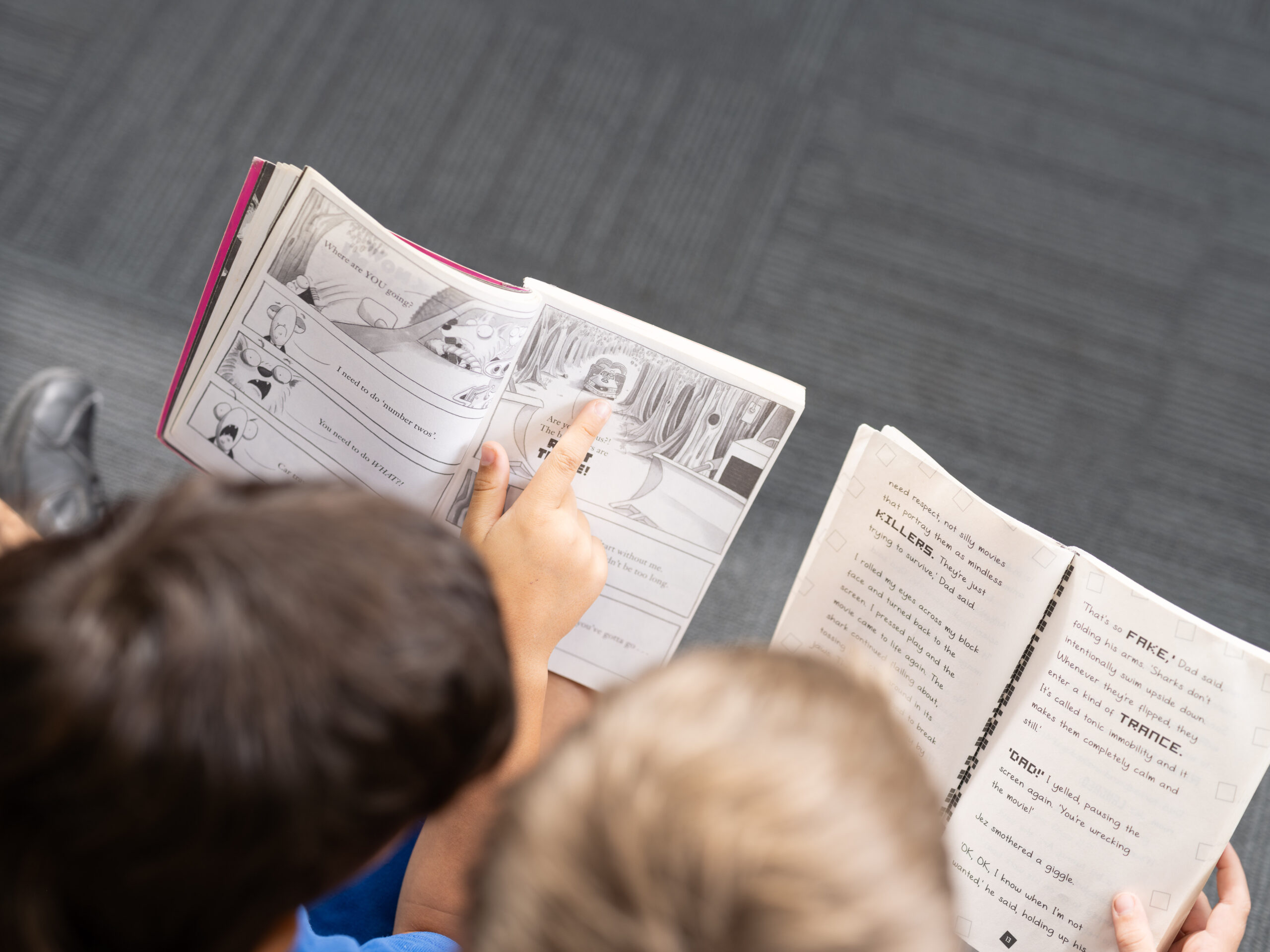
At our school, the Reading program is aligned with the Victorian Curriculum and places a strong emphasis on developing reading skills. Reading is a key focus across all year levels, enabling students to comprehend, interpret, and enjoy a wide range of texts. The program aims to build fluency, vocabulary, and critical thinking, helping students become confident and lifelong readers. Through the Reading program, students develop essential reading skills that support learning across all areas of the curriculum and foster a lifelong engagement with literature, information, and ideas.
In Prep to Year 2, students focus on building foundational reading skills. They learn to recognise letters and sounds (phonics), decode words, and develop sight word recognition. Reading lessons involve a mix of shared, guided, and independent reading, with a focus on narrative and informational texts. Students also explore comprehension strategies such as predicting, questioning, and making connections to their own experiences.
In Years 3 to 6, reading instruction focuses on developing deeper comprehension and analytical skills. Students explore a wider range of text types, including narratives, informational texts, poetry, and digital media. They learn to infer meaning, summarise information, identify main ideas, and analyse authors’ language and purpose. Reading lessons encourage discussion, reflection, and critical thinking.
Writing
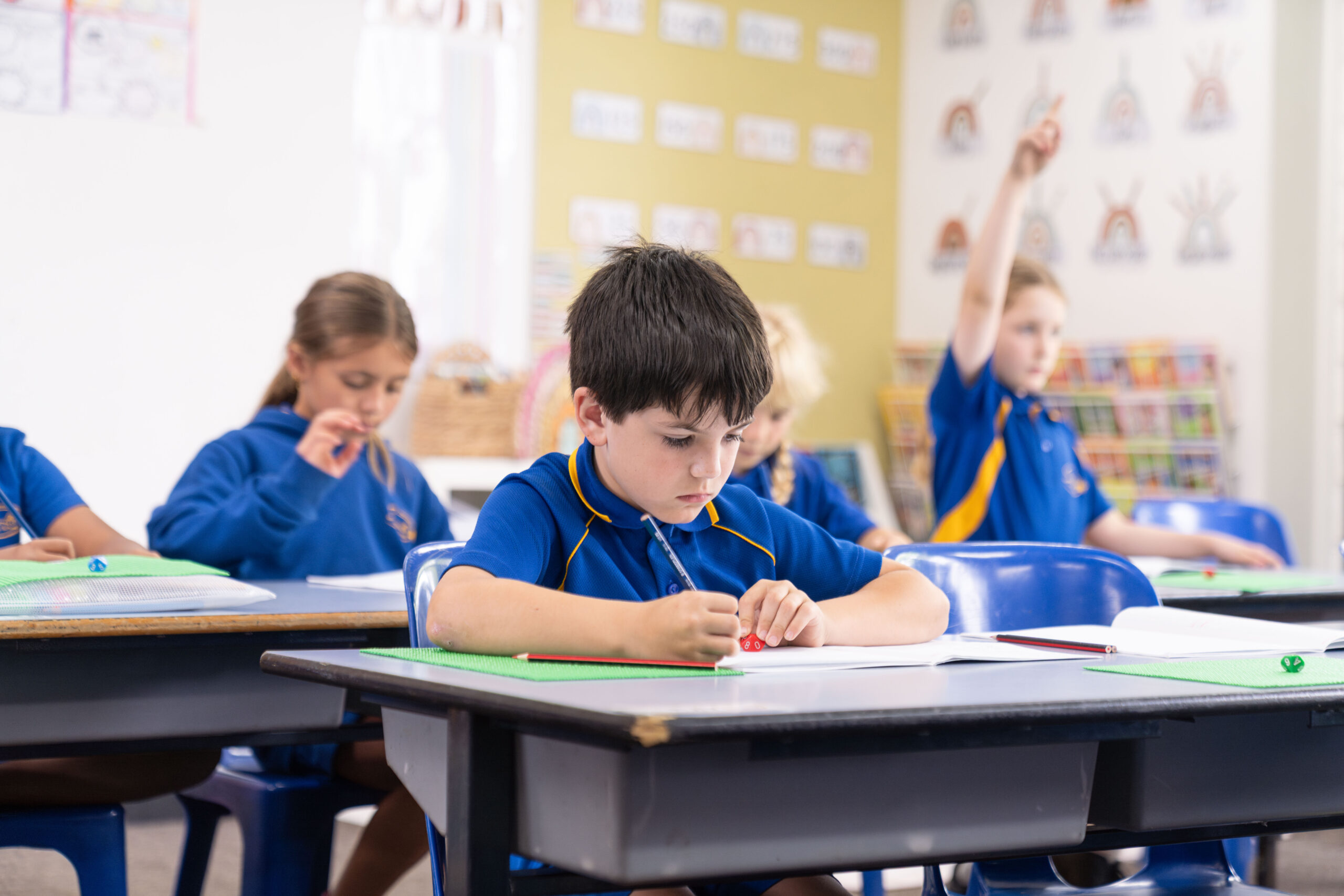
At our school, the English program follows the Victorian Curriculum and places a strong focus on developing writing skills. Writing is taught as a process that includes planning, drafting, revising, editing, and publishing. Students learn to communicate ideas clearly and creatively while developing correct grammar, spelling, punctuation, and sentence structure. Writing skills are integrated across all learning areas to support effective communication. Through the Writing program, students develop the skills, knowledge, and confidence to express themselves effectively in writing, supporting learning across all areas of the curriculum and fostering lifelong communication skills.
In Prep to Year 2, students focus on developing early writing skills, including letter formation, spelling high-frequency words, and constructing simple sentences. They explore different text types such as recounts, narratives, procedures, and information reports. Lessons provide opportunities for shared, guided, and independent writing, with a focus on expressing ideas clearly and using basic grammar and punctuation.
In Years 3 to 6, students build on foundational writing skills to develop more complex and structured texts. They write for a variety of purposes and audiences, including narratives, persuasive texts, reports, explanations, and poetry. Lessons focus on planning, drafting, editing, and improving clarity, coherence, and style. Students also learn to use figurative language, descriptive techniques, and text structures to enhance meaning.
Speaking & Listening
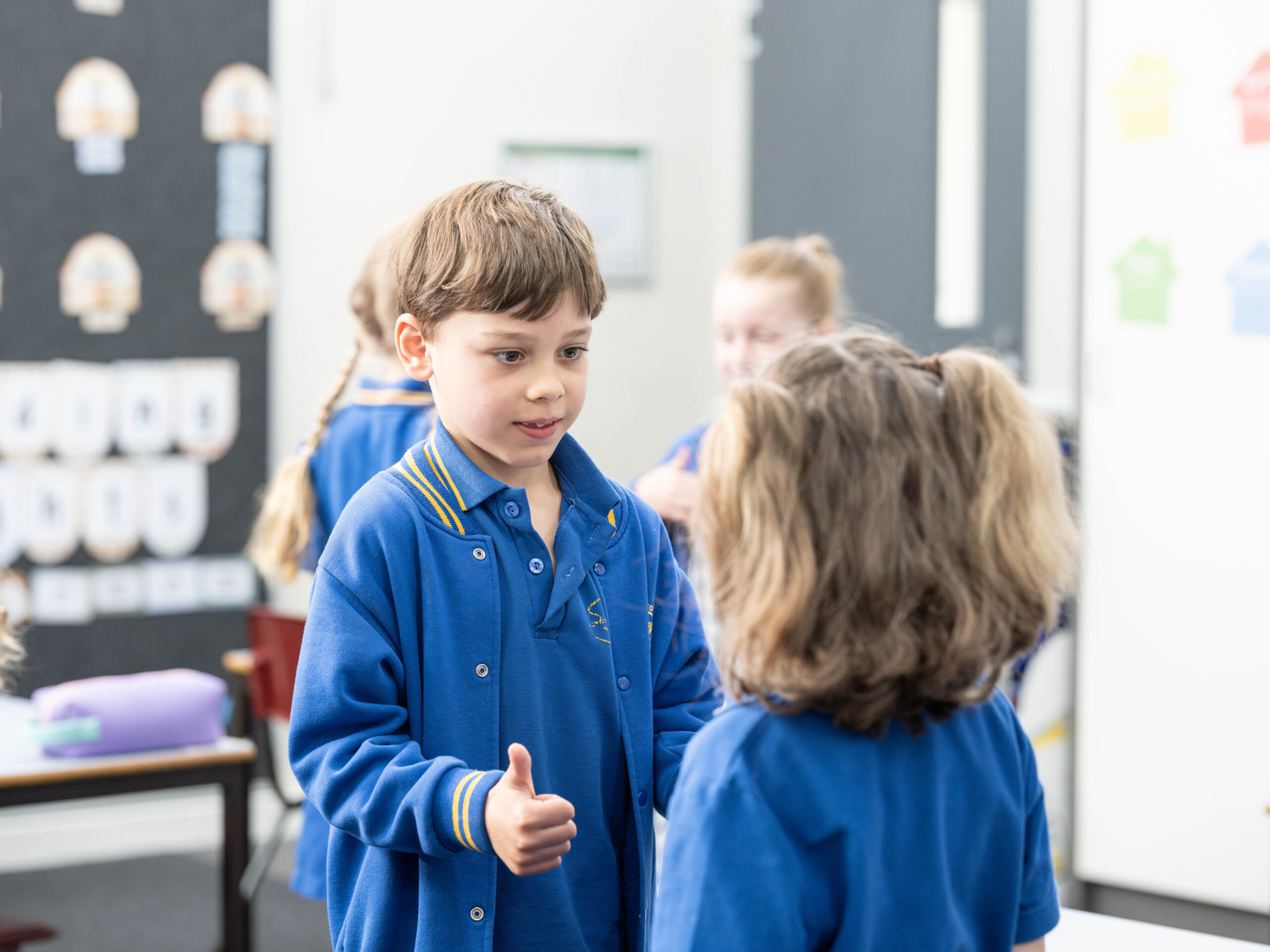
At our school, the English program follows the Victorian Curriculum and places a strong focus on developing speaking and listening skills. Students learn to communicate effectively by listening attentively, sharing ideas, asking questions, and participating in discussions. Speaking and listening skills are taught across all learning areas and support students to build confidence, collaborate with others, and communicate for a variety of purposes and audiences. Through the Speaking and Listening program, students develop the skills, knowledge, and confidence to express themselves clearly, listen respectfully to others, and engage successfully in a range of learning and social situations.
In Prep to Year 2, students focus on developing oral language skills through conversations, storytelling, play-based learning, and classroom discussions. They learn to listen to and follow instructions, take turns when speaking, ask and answer questions, and share their ideas, experiences, and opinions. Students build vocabulary and confidence in speaking to familiar audiences while developing active listening skills and an understanding of appropriate communication behaviours.
In Years 3 to 6, students build on their oral language skills by participating in more structured discussions, presentations, debates, and collaborative learning activities. They learn to communicate ideas clearly and effectively for different purposes and audiences, using appropriate vocabulary, tone, and expression. Lessons focus on developing active listening skills, responding thoughtfully to others, presenting information with confidence, and using evidence to support opinions and ideas. Students also learn to adapt their communication style to suit different contexts and audiences.